Water-based metalworking fluids (MWFs) are vital for the day-to-day operations of your machinery, from cooling down mechanisms to removing excess material. They are, however, also a potential breeding ground for bacteria. You’ll need to monitor their quality in order to maintain your machines and production quality. So, how do you prevent the formation of fungal biofilm in metalworking fluids?
You can treat and eliminate fungal biofilm if it forms in your metalworking fluids, but it’s best to prevent it in the first place by carrying out the following frequently:
In this blog, we’ll take a look at what fungal biofilm is, why it forms, and how you can prevent it in the first instance.
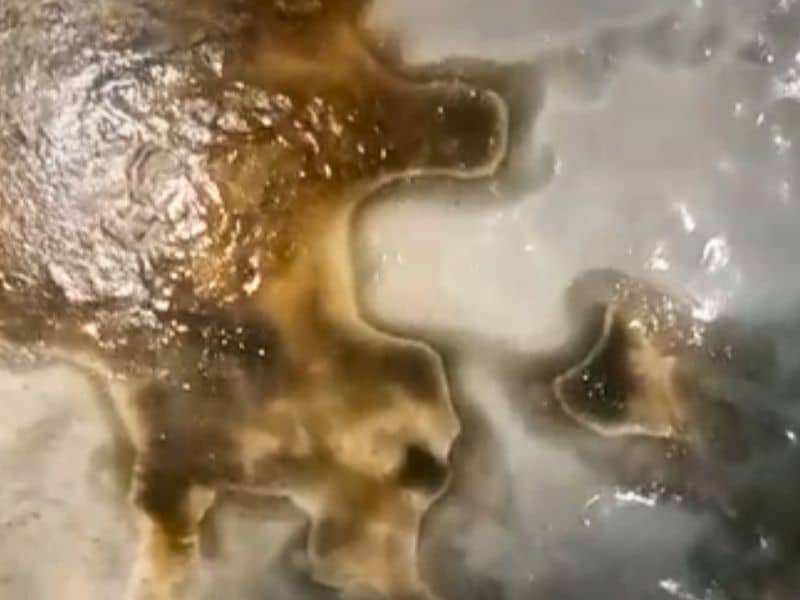
If your machines use water-based metalworking fluids, you might begin to see a sticky, grey or brown film forming on the walls of the tank or floating on the surface of the water. This is an indication of the early stages of fungal biofilm formation.
The warm, nutrient-rich environment created by metalworking fluids makes them the perfect habitat for microorganisms, which then creates a protective barrier that is often resistant to cleaning agents. This is called biofilm, and is a mix of fungus, oil and grime.
Fungal biofilm builds up through a multi-stage process that begins with the warm, nutrient-rich environment created by the metalworking fluids. Each of these steps provides an opportunity for prevention, with the film becoming difficult to remove when it’s in place.
Tramp oil is the unwanted portions of the lubricant, like hydraulic oil or slideway oil, that seep into your coolant from the machine tool. Unlike the coolant emulsion, tramp oil doesn’t mix well. Instead, it floats, forming a slick on the surface of the fluid.
These slicks are ideal for fungi to thrive – they act like a raft on which the spores can land and provide nutrients for the fungi to feed on.
Fungal spores are almost everywhere — in the air, dust, and even our clothing. In a well-maintained coolant system, chemistry like biocides and pH control keeps them in check.
However, if your dilution levels fall:
These string-like structures, called hyphae, begin to attach to surfaces throughout your machine, such as tank walls, filter housings, or pipes. The interface between the tramp oil and emulsion is the ideal place for this fungus to proliferate.
The hyphae start to spread outwards, sending tiny filaments across various surfaces and through the layers of oil.
As the fungi grow, they secrete a sticky substance made of sugars, proteins, and lipids. This is often called a biofilm matrix, and traps:
This results in a slime layer, or film, that either sticks stubbornly to surfaces or floats as a mat.
Once it has bound together and sticks in place, the biofilm is hard to remove. It blocks any chemicals or biocides from working because the outer layer of the film shields the inner cells.
Inside the biofilm, there may be zones with less oxygen, allowing fungi and bacteria to thrive alongside each other. Over time, this film thickens, darkens, and further degrades the performance of your coolant.
Biofilm can cause a range of issues, not only for your machines, but your business and operators:
These issues can quickly become costly and high-maintenance, and the safety of your machine operators should be the greatest priority. Prevention is key to maintaining your budget and safety standards.
Coolant monitoring services, like those we offer here at Pennine Lubricants with Procare Fluid Management, are the key to preventing the formation of fungal biofilm. Monitoring the bacteria levels of your metalworking fluids helps to reduce the chance of biofilm development, and can be tested through:
Structured coolant management services, like Procare Fluid Management, help to identify early signs of contamination and prevent the formation of stubborn fungal biofilms.
Pennine Lubricant’s fluid management service can help to:
The brand new digital web app from the team here at Pennine Lubricants is now live! Procare Fluid Cloud gives you real-time insight into coolant health, allowing you to:
Procare Fluid Cloud helps to take coolant management from a reactive process to a proactive one. You’ll see trouble coming, not after it’s already entrenched.
Find out more about Pennine Lubricants’ brand new web app in our blog: The Launch Of PROCARE Fluid Cloud – Our Coolant Monitoring Platform
Are you beginning to experience slime, black mats, or unpleasant odours with your metalworking fluids? Don’t wait until things worsen. Get in touch with the Pennine Lubricants technical team today, and we’ll help you diagnose your issue, plan immediate steps, and prevent the biofilm from getting the upper hand.
Remember: Our advice is always free!
Tel: 0114 285 2987
Email: [email protected]
A fungal biofilm is a sticky layer that can form on many surfaces of your machinery, with fungi growing and attaching when provided with the right environment. The fungi then secrete a glue-like matrix that binds together other fungi, oil, metal chips, and microbes.
Fungal biofilms typically begin to form when tramp oil enters the coolant system of your machine and floats on the surface, providing nutrients and a landing raft for fungal spores.
The spores then germinate if coolant chemistry isn’t properly controlled, allowing the fungi to attach, grow hyphae, and secrete a biofilm that then becomes entrenched.
Some of the key issues you’ll start to experience with your machines after a biofilm has formed include:
There are some early warning signs that can help you act early and prevent the formation of fungal biofilms:
Once the sticky matrix of the biofilm is in place, it provides a shield to the inner microbial cells, reducing the access of biocides or fungicides. Treatments will be less effective, and cleaning the affected surfaces becomes more difficult.
Yes! Tramp oil provides both nutrients and a settling place for fungal spores to land and germinate. Regularly controlling or removing tramp oil removes the nutrient source and disrupts the biofilm’s initial formation.
Don’t wait! Give the technical team here at Pennine Lubricants a call on 0114 285 2987 or email [email protected]. We’ll take a look, come up with the best solutions for your business, and help you implement improved monitoring and maintenance techniques.